

Audiobook Review: Why This Wretched Beauty is the Dorian Gray Retelling We Were Always Waiting For
Oscar Wilde published The Picture of Dorian Gray in 1890 and was immediately condemned for it. Critics called it unclean, effeminate, contaminating. The original magazine version had already been edited without his knowledge to remove what the editor deemed too vulgar, stripping out homoerotic language that he had deliberately placed there. None of it worked. The queerness was still on every page. A decade later, Oscar Wilde was prosecuted for gross indecency, and his own novel was used as evidence against him in court.
The story was always queer. It was always about what happens when you cannot be seen as you are. The portrait is the self you have to hide. The corruption is what secrecy does to a person over time. Dorian Gray is a story about the cost of living in disguise, written by a man who knew exactly what that cost was and paid it anyway.
Here is the thing about that moment in history that feels uncomfortably familiar right now: the threat was not just social. It was legal. The Criminal Law Amendment Act of 1885 made same-sex intimacy between men a criminal offense. He did not write around that law because he was careless. He wrote around it because he had no other choice. The encoding was survival. The book existed in the gap between what could be said and what had to remain unspeakable, and it was still too much. They came for him anyway.
We are in a different version of that gap right now. Trans people are watching their existence get legislated away in real time, bill by bill, executive order by executive order. Books with trans characters are being pulled from shelves. The message underneath all of it is the same one Oscar’s prosecutors sent in 1895: your story does not get to exist here. Your self does not get to be visible. The portrait stays in the attic.
That is why This Wretched Beauty by Elle Grenier is not just a clever retelling. It is the version that says out loud what the original could only encode. Elle reimagines Dorian as transfeminine, sets her in the same 1867 London, drops her into the same world of molly houses and hidden lives and beauty weaponized against the person who possesses it. The portrait still does its work. The manipulation is still there. But now the story is explicitly about what it costs to exist in a body and a world that refuses to see you correctly, and what happens when the first person who truly sees you might not have your best interests at heart.
Oscar Wilde wrote what he could in the language available to him. Elle writes what Oscar would have written if he had been able to say it plainly. That is what the best retellings do. They do not replace the original. They finish a sentence that was never allowed to end.
The audiobook is narrated by Jenet Le Lacheur, a transfeminine British actress and comedian who has spoken openly about her own experience with trans representation in storytelling. Elle wrote this book for the teenager she used to be. Jenet narrates it as someone who understands exactly what is at stake in that act of writing. If you have the option, listen to it!
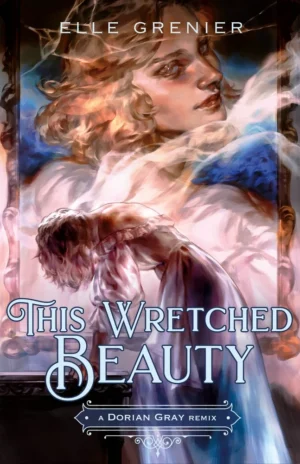
This Wretched Beauty
by Elle Grenieron February 17, 2026
Bookshop
Goodreads
Happiness needs to be earned in the face of impossible odds, or there’s no beauty in it.
London, 1867. Dorian Gray is the heir to a title and their family’s estate, but they’ve never been given the chance to decide whether that’s actually what they want out of life. Forcibly estranged from their father by their manipulative grandfather, Dorian feels trapped in the life that has been decided for them.
Then one night they sneak out of their grandfather’s house, they meet a sweet and talented young painter named Basil, who immediately recognizes Dorian as his new muse. They agree to sit for Basil for a portrait, and Dorian is struck by the beauty and depth that Basil paints into their likeness—and they dare to begin hoping there might be more to life than being their grandfather’s perfect, empty-headed heir.
Dorian is further elated when Basil introduces them to the world of molly houses and drag performers—they’ve never seen such joyful variety of humanity and gender expression. But, as the barrier between the London they know and the one they're discovering begins to crumble, Dorian must face the fact that freedom and safety do not come hand in hand.
The aftermath of this realization pulls Dorian into a terrible downward spiral, torn between guilt over their own actions and hatred for the suffocating expectations of society. They push away those closest to them, surrounding themself instead with vapid courtiers and decadent socialites. And as Dorian’s spiral of self-loathing deepens, something strange happens—Basil’s portrait of them begins to change. Their smile becomes a little sharper, the glint in their eyes a little colder.
Dorian will have to choose—embrace the wickedness within and allow themself to become what they were always meant to be, or dare to try for something far more fragile and dangerous: a life of their own making.





Leave a Reply