

Author Interview: Heiress of Nowhere by Stacey Lee
Stacey Lee has always written heroines who stand at the fault line between who they’re expected to be and who they dare to become, and Heiress of Nowhere might be her most haunting exploration of that tension yet. Set on an Orcas Island that feels as alive and unpredictable as its characters, the novel follows Lucy, a scientist, skeptic, and reluctant heir, as she navigates a world where logic buckles under the weight of myth. In this conversation, Stacey digs into the meeting point of fact and folklore, the eerie consciousness of place, and the inheritance (both claimed and unspoken) that shapes a girl named Nowhere into someone who must choose what she’ll believe in, and who she’ll become. Check out our interview below and pick up Heiress of Nowhere, out 3/17!
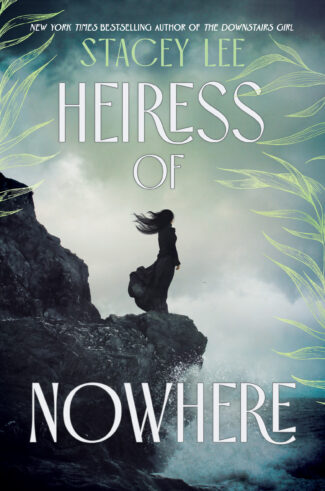
Heiress of Nowhere
by Stacey LeePublished by: Simon & Schuster Books for Young Readers
on March 17, 2026
Genres: Historical Fiction, Mystery, Young Adult
Bookshop
Goodreads
An orphan races to uncover a killer—who may have come from the sea—when she and her beloved orcas fall under suspicion in this gothic historical mystery from the New York Times bestselling author of The Downstairs Girl.
1918. Orcas Island, Washington.
Eighteen-year-old Lucy Nowhere has spent her life working on the massive estate of Dakon Sanders, the eccentric shipbuilder who took her in after she washed ashore as a baby in a green canoe. But she longs for a life away from the island, which, despite its abundance, holds no answers for her.
Just before her departure to attend university, Lucy discovers the head of her benefactor on a rocky beach. Rumors swirl that a mischievous spirit, the Orkus, has struck again, much like it commanded its minions, the seawolves, to kill a nameless cannery worker years ago. But Lucy doesn’t believe the seawolves are at fault. She believes that the seal heads that have started appearing on beaches have been placed there by a human hand.
Then, Lucy is named the heiress of the multi-million-dollar estate, displacing his dashing and mysterious nephew, Nash. The unexpected inheritance casts Lucy under new suspicion—and paints a large target on her back.
Though her best friend, the ruggedly handsome estate cowboy guard, Koa, urges her to leave the island with him, Lucy knows the only way she can discover who she is, and to free the island of its curse, is to find the real killer—before she becomes the next victim.
Interview with Stacey Lee
You’ve always had this beautiful way of writing smart, grounded heroines in worlds that bend around superstition or social expectation. In Heiress of Nowhere, Lucy’s a scientist in a community that runs on myth. How did you find that balance between logic and folklore, and what does that tension mean to you personally?
I’ve always been fascinated by the places where reason frays — where logic meets the unexplainable. Lucy’s a scientist, and she tries to understand everything through evidence and observation, but Orcas Island keeps defying her. The sea wolves, for instance — she feels this inexplicable connection to them that can’t be objectively measured. That’s where the real tension lives for me: when fact and fiction collide, what truths emerge? And when does fiction become dangerous? Writing this story was about exploring the limits of knowledge — how sometimes what we can’t quantify still shapes who we are and what we believe.
You’ve written vivid settings before, but Orcas Island feels especially alive, being
moody, mysterious, and almost sentient. How did you build that atmosphere? Did the
island’s isolation let you explore something new about freedom or fear that you hadn’t
touched in your earlier books?
Orcas Island has a strange kind of consciousness — the way the fog seems to breathe, how the forest closes ranks, how the water looks calm until it isn’t. I wanted the island to feel almost sentient, a living presence that doesn’t just contain the story but shapes it. Its isolation became a kind of laboratory for emotion — what happens when you’re alone with everything you’ve tried not to feel? Freedom and fear start to look a lot alike. In earlier books I explored escape, but here I was more interested in what it means to stay — to face the landscape, and yourself, when there’s nowhere else to go.
Lucy’s inheritance isn’t just wealth; it’s identity, danger, and belonging all tangled together. You’ve always written characters who fight to define themselves against what the world assigns them. What did inheritance mean to you as you wrote this story, especially for a heroine who’s literally named “Nowhere”?
I’ve always been drawn to the idea of inheritance as both a burden and a blessing, not only in terms of money and property, but what gets passed down in our genes. For Lucy, it’s not just wealth or history, but a legacy of silence and expectation. Writing her journey felt very personal to me. I was a quiet child, the kind people often mistook for having nothing to say. But that quiet carried its own kind of ache — a wound, in a way — and storytelling became how I learned to channel that hurt into something good. In that sense, inheritance isn’t only what we’re given; it’s what we learn to make from it, it’s a story we can revise if we wish.
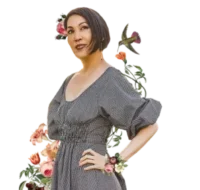
About Stacey Lee







Leave a Reply