Author Interview: Devils We Know by LT Thompson
We have been following L.T. Thompson since before Devils Like Us hit shelves last year, and Devils We Know, the sequel, is finally here! Cas, Remy, and Finn are back, the Memento Mori is still sailing, and the stakes have gotten significantly worse 😅. In a time when trans identities are under attack and libraries are under threat, L.T. Thompson is doing both jobs at once, writing queer historical fantasy from inside an institution that is itself a target. We wanted to talk about it! Check out our interview below, and pick up this duology, out now!
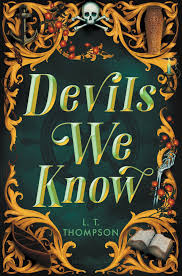
Devils We Know (Devils Like Us, #2)
by L.T. ThompsonPublished by: Bloomsbury YA
on June 9, 2026
Bookshop
Goodreads
The sequel to the Stonewall Honor winner Devils Like Us
Three queer teens must bring Death out of hiding to save one of their own in book two of this YA historical fantasy duology that's Our Flag Means Death meets The Lady's Guide to Petticoats and Piracy.
We need to find Death.
Cas, Remy, and Finn are on the run from the Order of Lazarus, a secret society that wants to use Cas's prophetic powers to capture Death and ensure that only the “unworthy” and “immoral” will meet their ends. Which will not only upend nature's balance but also tear apart the only place the friends have ever felt safe to be themselves: Aboard the Mori, where Cas can live openly as a trans boy, and where Remy and Finn are beginning to fall for each other. No matter what, they can't let that happen.
To protect their found family of queer sailors, the three teens will need to find Death first and strike a bargain of their own. But the society is hot on their heels-and so is a demon who's determined to claim the soul he's owed.
Interview with LT
The Mori exists as this pocket of freedom in a world that wants to erase people like Cas, Remy, and Finn, but a ship is also inherently temporary, always moving, never quite land. Was that tension between freedom and rootlessness something you were consciously building into the setting, and does it shift in book two as the stakes get higher?
The Mori has always been at the heart of this story—this queer crew carving out space for themselves on the outskirts of society. And yes, that space is temporary, but so is everything. Memento mori, after all. I wanted these sailors to be able to find stability in that rootlessness, not despite it.
But I deliberately wrote Cas, Remy, and Finn to be three characters who are not sailors at heart. While I don’t want to go too much into spoilers, this did really shape where their stories land in the end. I think, for those of us seeking queer community, it can be tempting to imagine that community as something that already exists somewhere, fully formed, and we just need to find it. That’s basically what happens for this trio in book one. They stumble in with the Mori’s crew almost by accident. And I think that’s what they needed at that stage of their journeys, because none of them had really realized before that this kind of community was even possible.
In my own life, though, I’ve been embracing the idea that community is something we build, and keep building. That can look different for different people. I wanted to give Cas, Remy, and Finn the opportunity to build something of their own—still connected with the sailors of the Mori, still finding that freedom, but putting down roots and creating stability for themselves in their own way.
You are a library worker writing a book in a moment when libraries and the books inside them are under direct attack. The Order of Lazarus in this series is essentially a group of powerful people who want to control who is allowed to exist. How does it feel to be writing that story right now, from inside an institution that is itself a target?
It’s obviously a very stressful time to be a public library worker. And to be a queer writer. And to be a trans person in general. In some ways, it was cathartic to get to write about a group like the Order of Lazarus. I get to control all the levers in fiction; I can give my characters the tools they need to confront the Order and win. The plot arc in real life isn’t always so clear. It’s all too easy to feel helpless. But I think the tools the characters find in Devils We Know are the same themes I keep coming back to when I’m overwhelmed by everything happening in the world: focusing on community, supporting each other, finding ways to put my specific skills to good use, and trying to do a little better today than I did yesterday.
Death in mythology and folklore is rarely neutral, it has politics and preferences and it gets bargained with. What drew you to Death as a character rather than a force, and what does it mean for your three protagonists that the thing standing between them and destruction is not a hero but something that exists entirely outside of human morality?
I always envisioned this version of Death as a very human character. I wanted his relationship with the captain to feel like this epic love story for the ages, but also believable and relatable and real, which meant Death had to be a person, not some distant, unfathomable force. I also wanted to tell a story where death itself—whether as a concept or as a character—isn’t the “enemy.” It just is. We grieve when people die, of course, and we spend our whole lives fighting to live, but we’re all going to die someday, and I don’t think there’s anything to be gained by pretending otherwise. The “enemy” in Devils We Know isn’t death itself, but the people who inflict violence and cruelty on others, who think their own lives matter more than the lives of other people, who are willing to hurt or kill others in their bid to protect themselves.
About L.T. Thompson
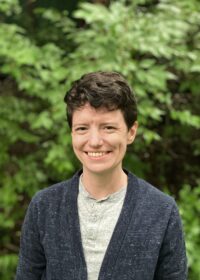
Lin / L.T. Thompson writes stories about queer kids and teens discovering themselves and having adventures. They’re a proud library worker and the author of two books for middle-grade readers, The Best Liars in Riverview and The House That Whispers (Little, Brown Books for Young Readers), and one for young adults, Devils Like Us (Bloomsbury). They grew up in Kentucky, spent a decade in Boston, and now live in Iowa with their wife and cat. When they’re not writing, they enjoy picking up new hobbies and letting their interests cycle like the tides.
Note: Author uses name Lin Thompson for MG books, and L.T. Thompson for YA books.