Author Interview: Shiny Happy People by Clay McLeod Chapman
Some horror stories rely on monsters while others rely on the slow, suffocating realization that the world we live in (the systems we trust, the choices we make, the people we depend on) might already be the nightmare.
In Shiny Happy People, Clay McLeod Chapman taps into that quieter, more unsettling strain of fear. What begins as a creeping sense of unease accelerates into something relentless, asking urgent questions about bodily autonomy, trust in modern medicine, and how quickly control can slip away. It’s horror that doesn’t just scare…it lingers.
We talked with Clay about the real-world fears that sparked the story, the emotional logic behind extreme choices, and why sometimes the scariest monsters are the ones wearing familiar masks.
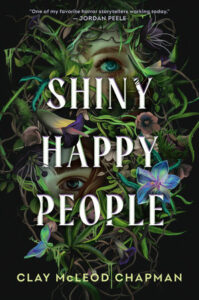
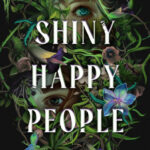
Shiny Happy People
by Clay McLeod ChapmanPublished by: Delacorte Press
on November 11, 2025
Bookshop
Goodreads
A gripping, genre-bending novel about a mysterious new drug plaguing a small town and one girl who must uncover the terrifying truth behind the haunting side effects—or she will be next.
At sixteen Kyra is still haunted by the horrors she saw as little girl living with her mother’s drug addiction. Years later, Kyra doesn’t always feel like she belongs—and disturbing dreams come to her at night.
When a new party drug makes its way to her high school, Kyra’s life becomes an actual nightmare. A challenge spreads among the students thanks to a few videos circulating—and Kyra is unable to escape the inexplicably strange side effects.
Everyone around her seems to be mysteriously changing, including the people she loves the most. Her brother has a new personality overnight. Her best friend suddenly feels like a stranger. The only other person who seems to be noticing the eeriness around them is Logan, the new boy at school. Like Kyra, he has steered clear of the party scene.
But as strange occurrences begin to turn sinister, Kyra can’t shake the feeling that something unnatural is at play . . . as if something deadly spreading is in their veins. With Logan’s help, she decides to find out exactly what is behind the mysterious drug—before they’re next. As they begin to get closer to the truth, the line between Kyra’s past and her present blurs . . . and she will need to face the terrors inside herself to save everyone.
Interview with Clay McCleod Chapman
You often pull inspiration from things happening around us, the cultural climate, collective fears, the ways people can unravel together. With Shiny Happy People, what was the real-world spark that made you think, “This is actually horror”? And how did you decide how much of that reality to keep versus how much to distort?
The world’s a pretty scary place, you know? More often than not, you don’t need to look in the horror section of your local bookstore to find nightmares these days . . . you can just open the newspaper.
In an interesting way, I think the function of horror as a genre — either literary or cinematic — has reversed a bit. I think it used to be that horror novels or films helped us understand the world at large and the evils within. Night of the Living Dead and Invasion of the Body Snatchers are perfect examples of monstrous metaphors helping readers and viewers process the cultural fears of the moment.
Now, however, I almost feel like these monstrous metaphors offer a certain level of catharsis. The cultural fears are still there, and the mask of the metaphor — whether it’s zombies or body snatchers — offers a safe space to exorcise those personal fears, give them a contained environment to run amok, and dispel them.
For Shiny Happy People, I was able to dust off the body snatcher metaphor and slip it over a current cultural fear that I’ve been feeling — the paranoia of one losing their sense of autonomy by way of modern medicine. I’m filtering the narrative primarily through the opioid epidemic: the overprescribing of prescription painkillers, the inability to know who to trust when it comes to these medicines, the overwhelming accessibility of them, and how easy it is for younger people to get their hands on them. That’s some scary stuff!
The body snatcher trope is a perfect Halloween mask to slip over these real-world fears, giving readers a chance to explore them on the page — and hopefully release them by the time the book is done.
Your books are terrifying not just because of the monsters, but because of what ordinary people do when pushed. When you’re developing characters in a story like Shiny Happy People, how do you figure out the line between believable human behavior and the kind of escalation that makes readers want to sleep with the lights on?
You know . . . it’s an interesting question, one that I ask myself all the time: Did I go too far? Would I know when too much is too much? Did I cross a line this time? Have I pushed the envelope or simply torn it all to tatters?
I’m realizing every reader is a little different — what may be too far for one person will probably not be far enough for another. So my remedy is to simply be true to that particular character. In this case, Kyra. I have to yield a certain amount of control to her and trust that we’ll navigate the story together.
If we try to place ourselves in the position of our protagonists, they’ll go a lot further than we might expect. Further than even ourselves. Because here’s the truth: People do weird stuff all the time.
In horror movies, audience members are always like, “Don’t go up there!” or “I would never do that!” But we don’t know what the heck we would do unless we were thrust into those specific situations ourselves.
So I stop and ask: Where is this character right now emotionally? Mentally? Physically? Spiritually? Philosophically? If I’ve done my job grounding those choices in emotional truth, then I have to trust the story — even when it scares me.
So much of your work has this slow, creeping dread that suddenly breaks open. For a minute, you had me believing Shiny Happy People wasn’t going to be as terrifying as your adult books. (How wrong I was.) How intentional is that pacing? Do you map out where the “snap” moments live, or do those emerge naturally as the story deepens?
That’s so great to hear. I feel like Shiny Happy People might be one of my fastest-paced, most breakneck books yet. I definitely wanted this one to shift into a higher gear and just continue to escalate.
That’s another great thing about the body snatcher trope: There’s no time to sleep. You sleep, you die. So you’re constantly outracing your own exhaustion while your body begins to collapse.
I was fortunate to have a lot of support during development, so there were a lot of eyes on the manuscript from the beginning. That helped hone the mechanics — the pacing, the escalation, the ability to keep pushing the narrative further and further until . . . well, until things snap, crackle, and pop.