Author Interview: The Others by Cheryl Isaacs
Cheryl Isaacs is a Mohawk author writing YA horror that uses Indigenous folklore the way good horror has always worked best: not as decoration but as the beating heart of what the story is actually about. The Others is the second book in her Unfinished series, picking up after Avery has pulled Key from the deadly black water and broken the cycle from her family’s Kanyen’kehá:ka stories. The supernatural threat is different this time, something moving in the mirrors, something watching from the other side, and the question of how you put a town back together after real trauma is as present as the monsters. We got to ask Cheryl some questions about what went into building this story. Check them out below and pick up both books, out now!
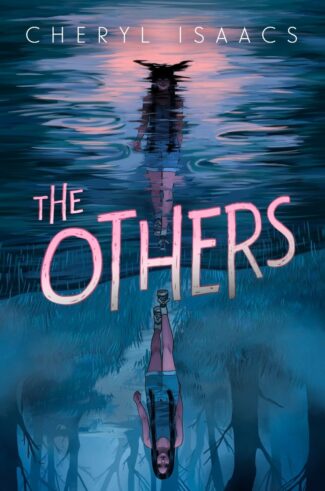
The Others (The Unfinished, #2)
by Cheryl IsaacsPublished by: Heartdrum
on September 16, 2025
Genres: Paranormal, Thriller, Young Adult
Bookshop
Goodreads
In this haunting sequel to her deliciously scary debut, Cheryl Isaacs (Mohawk) explores the sharp edges of lingering trauma and the bonds of love that heal us--for fans of She is a Haunting and Sawkill Girls!
Only weeks ago, Avery pulled her best friend, Key, from the deadly black water. The cycle from her family’s Kanyen’kehá:ka (Mohawk) stories is finally broken, the black water is now a harmless lake, and her problems are far from supernatural: All Avery wants is a normal summer with Key, her now-boyfriend.
The trauma, however, casts a long shadow over the town. Some victims never returned. Terrifying memories threaten to resurface, but Avery pushes them down. Who she’s really worried about is Key. The two are supposed to be closer than ever—so why does he feel so distant?
Wracked by anxiety, Avery begins to see a chilling reflection in every mirror, one that moves on its own—and she’s not the only one. With her family’s safety in the balance, Avery must decide: Run away to the safety of normal life with Key, or return to lake’s edge and face her reflection, before her home is subsumed by darkness once and for all….
Interview with Cheryl Isaacs
Your book explores what it means to reconnect with culture in order to survive and protect others. How did writing this story deepen or reshape your own understanding of cultural inheritance, responsibility, and healing?
The thing about inheritance is that although it’s framed as a gift, it’s not always wanted. Attempting to reject your inheritance means cutting yourself off to some degree from your family or heritage, essentially denying a part of yourself. In some situations this might seem like a good thing, especially if the connection is painful or seems harmful. It might feel self-protective. But some painful things can be valuable and even if your inheritance is initially unwanted, failing to deal with it ultimately makes you less than what you could be. Writing this story led me to think about ways in which when our own survival or growth is crucial to others, feeling responsible for others can provide motivation to come to terms with, if not accept, whatever cultural or familial inheritance you’ve been left. Left to her own devices, Avery may never have embraced her cultural inheritance to the same degree if not for the outside pressure from the black water.
Avery doesn’t reject her culture so much as she’s prevented, but not in a malicious way. The family and community members in her life are initially very closed off. Avery’s mom and Foster fear passing down something negative and think that they’re shielding her from something painful when in fact, what they have is exactly what she needs to survive. Ultimately they are able to see the value in what they have to give, how struggle and loss can lead to new lives. I hope it leads readers to view others in a more compassionate light. Everyone has their own inheritance to deal with. Doing so would be easier if we granted each other a little grace.
How did you approach balancing horror elements with emotional and cultural truths, especially in a way that feels authentic rather than symbolic?
Horror is a very emotional genre and this story is very much about negative emotions invading the physical world. What drove this story is the fact that what menaces Avery is a manifestation of her inner struggles. It’s everything she fears made real, isolation, the people she loves turning on her, and even with the obvious supernatural aspect, I wanted to keep it grounded in real life to keep that connection strong. I love stories that take place in a world where there’s something really wrong but things seem fine on the surface and not everyone clocks the danger. Even in our world today, some of us are really cognizant of horrible things happening but others are blissfully unaware that they’re about to be snatched by the monster.
When the reader can imagine themselves in a reality not so unlike their own, I think it gives access to an emotional level that is harder to reach in a very alien environment or wild situation. Emotion has to be part of the equation because if the reader isn’t invested then there’s nothing really to lose. Everything Avery experiences is a mirror of her internal world. Her emotions birth her monsters.
Many YA stories focus on individual strength, but your book emphasizes family and community as essential to survival. What does collective strength mean to you and how did you want readers to see that reflected differently from traditional horror narratives?
Everyone loves a Final Girl but even the best of them don’t make it to the end entirely on their own. This story naturally lent itself to exploring collective strength because Indigenous history post-contact is a horror story in which the community is the Final Girl. Mainstream society is built around recognizing individual achievement which can be misleading and potentially harmful to young people who think the only option is to do great things alone. Most of the time, that’s just not true.
I think in YA especially, it’s important for readers to see that some monsters can’t be defeated alone. Needing or accepting help doesn’t mean that you’re not enough, it means that you’re part of something bigger and stronger than you could ever be alone, something that together, is incapable of losing. I really wanted the sense that even after learning and growing so much, Avery needs the support of others and comes to welcome it. She recognizes that she’s strong today, but tomorrow she might be lending that strength to someone else. It’s a much more satisfying, and realistic, image than the singular hero who does it all.
About Cheryl Isaacs
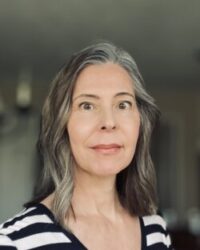
Cheryl is white/Indigenous writer and educator from Ontario. She writes eerie stories about scary things but rest assured that the dog always lives. Cheryl can often be found running through the Carolinian forest of southwestern Ontario, where she has fearlessly enjoyed the trails for years. Her Kanyen’kéha culture often appears in her writing, including her first horror duology, The Unfinished and The Others.