Author Interview: The Secret to Belonging by Megan E. Freeman
Written entirely in second person, set partly in 1980s California and partly in northern Norway, The Secret to Belonging follows a narrator with no name through a family shaped by her brother’s addiction and a year abroad that changes everything. The Secret to Belonging by Megan E. Freeman is out September 15th and we sat down with Megan for some questions to celebrate!
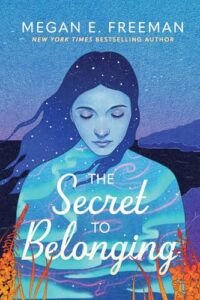
The Secret to Belonging
by Megan E. Freemanon September 15, 2026
Bookshop
Goodreads
A neglected teen travels to Norway for a fresh start in this stunning coming-of-age novel in verse about longing, love, and the courage to create joy from the ashes of despair by award-winning and New York Times bestselling author Megan E. Freeman.
You are invisible in your own family. Your parents spend all their care and attention on your brother, who is addicted to drugs. Your dreams don’t matter to anyone but you.
Your only ticket out is a college fund left by your grandfather—until your parents use it to pay for your brother’s drug rehab.
Just when your future seems about to collapse, you are offered a a scholarship to become an exchange student in a remote part of Norway. It’s an invitation to begin a new life in a new place with new people…a place where you might finally feel like you belong.
Interview with Megan Freeman
The story’s narrator has no name and is instead addressed as “you” for the entire book. What did writing in second person allow you to do with this particular story that a named first person narrator could not?
In early drafts of The Secret to Belonging, I experimented with both first and second person voice, but ultimately I liked second person better. It felt both intimate and distancing, and it forced the reader into a kind of empathetic alliance with the main character. I also like to push the boundaries of my creative comfort zones, and since I had written in first and third person voice in other books, I was eager to play with something new. In some ways it made me feel unusually close to the reader as I was writing. If I’m speaking to “you” and telling you everything that happened to you, it stands to reason you must already know much of what I’m going to say. It creates a subtle and interesting dynamic between the reader and the teller of the story.
You actually lived in northern Norway, which I am sure gives depth to the setting. How did writing about a place you loved from your own life change how you built that world on the page, and what did you want readers who have never been there to feel when they arrived?
As part of the writing process, I excavated old photo albums and read through archived correspondence, and it was incredible how many memories came back to me. I also made a concerted effort to reawaken my language skills. I consumed Norwegian podcasts and television shows, and hearing people speaking evoked its own set of memories. I hope the book captures what an extraordinary country Norway is, and I hope readers will be inspired to venture out and explore a new place they have always wanted to go. Travel expands our minds and hearts like nothing else, and I wish everyone had the opportunity to do a foreign exchange of some kind or another.
The narrator’s brother’s addiction consumes her family in ways that leave her invisible inside her own home. That specific experience, of loving someone whose illness takes up all the space, is something a lot of readers will recognize without it being their story exactly. How did you write about addiction from the outside without making the brother a villain or the parents monsters?
That’s a really interesting question, and I honestly didn’t think much about how the brother or the parents would be perceived. My only goal was to stay solidly in the perspective of the main character and write her experience as fearlessly and honestly as possible. I wanted her to trust the reader enough, and to be brave enough, to tell the entire truth of her life, regardless of whether it was socially acceptable or supportive of anyone else. I wanted her to confide in the reader without fear of judgment or condemnation, and for her to always speak from a place of deep integrity. My singular focus was to maintain fidelity to her truth and courage.
About Megan E. Freeman
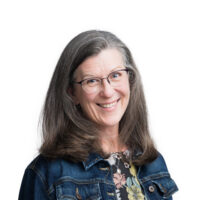
Megan E. Freeman attended an elementary school where poets visited her classroom every week, and she has been a writer ever since. She writes middle grade and young adult fiction. Megan is also a Pushcart Prize–nominated poet. An award-winning teacher with decades of classroom experience, Megan taught multiple subjects across the arts and humanities to students of all ages. She divides her time between northern Colorado and the Texas Gulf Coast. Visit her online at MeganEFreeman.com.