Book Recs: The Season of Light and Darkness by Jillian Cantor & a New Generation of Dystopian
Earlier this year, we wrote about how a generation of YA dystopian fiction spent a decade warning us and we filed it under entertainment while the conditions those books described quietly took root. Books written mostly by folks imagining what future oppression might look like, that are settling closer to reality than any of us wanted to admit.
And now we are seeing a new generation of dystopian novels enter the scene.

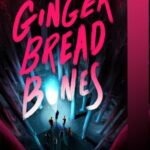
The Season of Light and Darkness
by Jillian CantorPublished by: Simon Pulse
on August 4, 2026
Bookshop
Goodreads
For the first printing only! This hardcover features sprayed stenciled edges while the special edition supply lasts.
A girl is woken early from her cryogenic slumber to find the authoritarian rule her family had hoped to escape is still very much in effect in this unforgettable young adult dystopian thriller perfect for fans of Divergent and The Handmaid's Tale.
In the months since a dictator was elected president, the United States has been turned upside down. Dissenters are deemed terrorists, including sixteen-year old Ellie Jacobs's family.
To escape persecution, the four of them—Ellie, her younger brother Scott, and their parents—decide to freeze themselves cryogenically for ten years in her father's lab. In ten years, things will be better. They have to be.
But the government discovers the lab after only three years and thaws Ellie early. She awakens, completely alone, to a nightmare of a strange new world and is told the rest of her family didn't survive. Suddenly, she must abandon everything she knows to go to through "ReAdmittance" and become "Initiated."; Ellie is terrified. . .until her boyfriend, Ryan, now a nineteen-year-old Initiated soldier, shows up and tells her everything will be fine, that she should trust the good people around her.
But Ellie isn't sure if she can still trust Ryan.
What Ellie doesn't know is that Scott never went through with the freeze. He ran away and has joined a band of teenage resistance fighters living in the mountains. No longer her "younger" brother, he's now sixteen just like her. When Scott learns Ellie has been thawed early, he decides he must risk everything to save her before the brainwashing begins.
Together with other brave rebel teens, Ellie and Scott must navigate this terrible new world to find their way back to each other, before they lose everything—including who they are.
We Were Warned & Now Art is Writing Back
The new wave of YA dystopian is not just set in worlds that reflect what is happening right now, though they are. Instead it is written by people who are living inside the systems the genre has always been about. Trans authors writing trans protagonists surviving theocracies. Black authors putting Black girls at the center of worlds meant to extract from them. Mexican American authors writing colonial power structures from the inside. Asian authors writing corporate surveillance and virtual reality control from their own cultural vantage point. The distance between the author and the oppression being described has collapsed.
Jill Tew said it directly when we interviewed her: Black communities are so often the canary in the coalmine for these atrocities, and yet Black protagonists have historically been absent from the fictionalized dystopian adventure. Her two novels, The Dividing Sky and An Ocean Apart, put Black girls at the center of worlds extracting something from them, one their emotional labor and memories, one their home and their future. Both are out now with limited edition special printings available at jilltew.com. The difference between a dystopia written about a community and one written from inside it is the difference between a warning and a reckoning.
Sonido Reyes, whose debut The Lesbiana’s Guide to Catholic School was a favorite for both of us, is making their first move into the genre this September with To Our Untamed Core, out September 22nd. Temo is a trans boy living under a colonial theocratic regime called the Holy Order, hiding his identity in a world where discovery means being thrown into El Torneo, a brutal fight to the death. When his boyfriend is sentenced to the tournament, Temo enters to save him. Sonido is Mexican American and trans, writing from inside both the colonial history and the identity the book is about.
Juno Dawson, a trans woman, has spent her career writing about what it costs to be yourself in a world that does not want you to be. Survival Show, out now, takes that instinct and dials it up to eleven. Taryn Beck lives in a Scottish refugee camp in a post-war world where the only way out is to win Starmaker, the most watched reality TV show on the planet, where the losers are not just eliminated from the competition. Juno has said the whole system around gender transition is outdated and flawed, and Taryn’s dilemma, needing something from the establishment while recognizing it is deeply toxic, is something she knows personally. The book is also genuinely fun, which she credits to a very British tradition of gallows humor. Autocrats hate being mocked. She keeps doing it anyway (yes!).
Ava Reid, whose previous books have been gothic and lyrical and fairy tale adjacent, makes a sharp left turn into dark academia dystopian thriller territory with Winterveil, out September 15th. Four teenage criminals are recruited to a secret military academy in an alternate Cold War future. Ava studied religion and ethnonationalism at Barnard and has worked for both a refugee resettlement organization and a U.S. senator, creating depth to a book about power, about who gets to fight and for whom, and about what institutions ask young people to become in service of someone else’s war.
Chloe Gong, a New Zealand Chinese author best known for her Shanghai historical fantasy series, launched a new trilogy last November with Coldwire, a cyberpunk dystopia about two girls living in a virtual reality world owned by the megacorporation NileCorp. It is being compared to Severance and Black Mirror. Chloe is writing about corporate surveillance and the commodification of consciousness from a perspective that is not the default American one, a reminder that our current version of fascism isn’t the only.
Gayle Forman is funding her next novel through Kickstarter, an intentional choice for the moment we are living in. Orchid Girls is set in a world rebuilt after a cataclysm on a simple principle: everyone in their place, everyone with a purpose. Miri is an Orchid Girl, beautiful and honored and chosen, until she graduates from the Cloister and discovers what she was actually chosen for. Not honor but transaction. Her body, her existence, in service to the powerful men who hold the broken world together. She uses the skills of observation and performance she was trained in and turns them into something her masters never anticipated: strategy and resistance. The profit-share model Gayle chose for this book is itself a statement. One of the most broken systems, she writes, is the winner-take-all ethos contributing to the extreme income inequality making our current world a dystopia. The book and its production model are the same argument.
Caryl Lewis, an award-winning Welsh novelist and actual beekeeper, published The Danger of Small Things in March. In her dystopia, the extinction of bees has collapsed civilization, girls are taken from their families at eleven and forced to hand pollinate crops, and books and art are banned. Jess knows how to read and paint, and she uses what she knows to start something. Caryl described the book as a love letter to her daughter and a form of protest against those who are careless with the environment.
Jillian Cantor’s The Season of Light and Darkness, out now, asks what you do when you try to wait out an authoritarian president by freezing yourself cryogenically and wake up three years later to find nothing has changed. Ellie Jacobs’s family went under to survive. She comes out alone, into a world where her family is gone and the regime is still very much in effect.
And then there is The Sixth Faction by Veronica Roth, out this fall, which is its own kind of statement about where the genre is right now. Veronica is returning to the world of Divergent fifteen years later, not with a sequel but with an alternate universe, asking what happens if Tris makes a different choice at the Choosing Ceremony. The announcement broke the internet in April…and we are not so patiently waiting!
We wrote earlier this year that YA dystopian fiction was never really about the future. It was about teaching young readers to recognize the architecture of control. What has changed is who is doing the teaching. The authors writing these books now are not imagining oppression from a distance. They are writing from inside it, from their own bodies, their own histories, their own communities. And that changes everything about what the books are able to say.