

Audiobook Review: Where You’ll Find Us by Jude St. Jude
I listened to Where You’ll Find Us by Jude St. Jude on audio and I was sobbing on the way to work. Full on, ugly crying, probably concerning the people in the cars next to me. This story is so beautiful and you might still have to take it in pieces (or not…it is worthy of being read in one sitting!). Check out my full thoughts below!
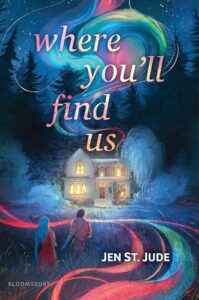
Where You'll Find Us
by Jen St. JudePublished by: Bloomsbury YA
on June 2, 2026
Bookshop
Goodreads
Calla Quick has no future. At least, that’s how it feels. Her parents disowned her via text message, and now she can’t afford to go to an all-women’s college with her girlfriend Ramona like they planned. But Calla wonders if maybe that’s for the best—because even though Calla told Ramona her parents disowned her because they found out she’s gay, the truth is, Calla has been questioning whether she’s a girl at all.
Calla wishes she had more time to figure everything out, and one night, her wish is seemingly granted. When Calla and Ramona stumble upon a mysterious farmhouse in the woods, they meet five teens who claim they’ve lived there for decades. The land, which they call Amaranth, acts as a safe haven for queer kids throughout history—a place free of hate, free of violence, free of time itself. Here, Calla can be Cal, and they feel instantly accepted. They don’t have to worry about the future because at Amaranth, it will never come—until one night when the clock strikes twelve.
Now under a literal ticking clock, the housemates must find a way to stop time again or face going back to their harsh realities, but as Cal learns everyone’s story, they begin to wonder what queer people lose when their history is lost to time.
Review
Cal is a trans teen who has just been disowned by their parents and is terrified of losing their girlfriend Ramona, who has made it clear she would never date a trans man. One night they stumble onto a farmhouse in the woods called Amaranth, where time does not pass and queer kids from across decades have been living, waiting, hiding. Sunny from the 1920s. Kiyo from the 1940s. Abe from the 1950s. Lionel and Ambrosia from the 1990s. And Cal, from 2026, who has finally found a place where they can just be.
What Jude does with Amaranth is something I have been thinking about since I finished it. The farmhouse is a fantasy of queer safety, the kind of community that exists outside of time and consequence, where you do not have to explain yourself or fight for the right to exist or deal with the horrors that have persisted through queer existence. And Jude builds it so tenderly, so specifically, giving each of the residents a full history and a fully realized identity that is specific to the moment they came from. You fall in love with all of them. You are supposed to.
Because then the clocks start ticking. 😅
The genius of this book is that Amaranth is not the answer. It cannot be. A place outside of time is also a place outside of change, and queer history, the real and devastating and beautiful thing that Jude is writing about, is made of change. Of the AIDS crisis and the Lavender Scare and Stonewall and everything that came before and after. The residents of Amaranth are safe but they are also frozen. They have not gotten to live. And the book is honest about what that costs, what it means to choose safety over the full messy terrifying reality of being a queer person in the actual world.
The ending is bittersweet. It has to be. Jude said in the interview we published that they wished this book would feel slightly outdated by now. It does not. Federal IDs are being reversed. Trans kids are being legislated out of existence. Queer history is being scrubbed from websites and school curricula. Reading about a farmhouse outside of time where queer kids from across decades have been hiding from the world is not escapism right now. It is a document of something true.
I adored every character in this book. I grieved leaving Amaranth. And I think that is exactly what Jude intended, to make you love a community of safety so completely that returning to reality feels like a loss, and then to make you understand that returning is the only option that matters. Because the people who need Amaranth are out here, right now, and the only way to build something real is to come back and do the work.








Leave a Reply