
Author Interview: The Fight of Our Lives: AIDS in America by David Levithan and Gabriel Duckels
Being xennial/elder millennial queers, we grew up on the edges of the AIDS crisis, old enough to feel its shadow but young enough that much of what happened was filtered through adult commentary, news coverage, and the particular grief of a community still figuring out how to hold all of it. The Fight of Our Lives: AIDS in America by David Levithan and Gabriel Duckels is a book that feels urgently necessary now, when funding for HIV/AIDS care is being cut and an entire generation of young queer people has grown up with no living memory of what that crisis cost. It’s out now and we got to ask David and Gabriel some questions about writing it!
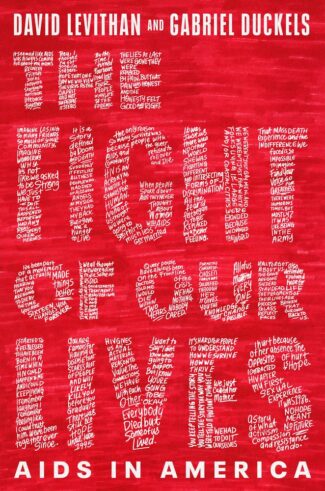
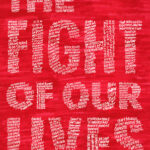
The Fight of Our Lives: AIDS in America
by David Levithan, Gabriel DuckelsPublished by: Knopf Books for Young Readers
on April 21, 2026
Genres: Historical Fiction, Non-Fiction, Young Adult
Bookshop
Goodreads
A thoughtful, poignant look at the AIDS crisis in the United States that includes primary source interviews, history, medical research, and cultural touchpoints.
The AIDS crisis in America is complex and composed of countless individual stories of grief, love, and advocacy. Its history shows the power of youth activism, how creativity and community can be vehicles for social change, and how bigotry and misinformation led to inequality in care.
The early days of the AIDS crisis saw LGBTQ+ and other marginalized communities making strides in the fight for equality. As many people in positions of power were slow to act or actively didn’t pay attention until their own communities were affected, the fight for equality turned into a fight for their lives. Grassroots efforts filled in gaps where mainstream medicine and politics failed, and over time, a cultural shift of awareness emerged, which led to more research and more treatments. And while the disease has transitioned from a death sentence to one that people can live full lives with, there are still people dying of HIV/AIDS today because they can’t access the care they need. The fight may have begun decades ago, but is not yet over.
Award-winning author David Levithan and University of Cambridge PhD Gabriel Duckels detail a brief history of the epidemic, touching on key moments and figures, such as Ryan White, ACT UP, Larry Kramer and Anthony Fauci, Pedro Zamora from MTV’s The Real World, and the Names Quilt. Threaded throughout are poems, essays, and other creative works, in addition to first-person interviews and narratives. The most important takeaway is that we must remember. We need to know what happened and why. Our voices are powerful, and they can make a difference.
Interview with David Levithan and Gabriel Duckels
Writing about the AIDS crisis requires sitting with immense grief, but also with the knowledge that much of that grief was preventable. As queer writers and historians, how did you navigate the moral dimension of that history, the anger at institutional abandonment, the tenderness toward the communities who held each other up, and the responsibility of passing that story forward?
Gabriel Duckels: You have to focus on the truth. And you have to have a sense of humor as you do it, or the anger and frustration at the roads not taken will drive you nuts. Focus on the truth of all the injustice, yes, but the truth of love, community, and rightful anger, too.
There is a tension in queer communities between honoring the dead and not wanting to define ourselves by tragedy. While working on this book, how did you think about that balance? What does it mean to remember the crisis without allowing it to eclipse queer joy, creativity, and survival?
David Levithan: I think the decisive element here is time. In the 1980s and 1990s, the catastrophic loss of life and the harsh, dangerous way our community was defined by a disease made a counterbalance crucial: Defining us by our deaths made it easier for others to rob us of the humanity our lives deserve. But in the decades since, as treatments were found and our community and the narrative about our community moved on to other things, a different imbalance formed, a near erasure of what had happened to us through a mix of negligence, fear, and spite. So I think the greater risk right now is for us to forget the tragedy, rather than for us to be defined by it.
Also, as time has gone by, we have learned to tell both stories at once: the tragedy of so many needless deaths and, to borrow your phrases, the joy, creativity, and survival that came with our community’s resistance and activism.
For younger LGBTQ+ readers who did not live through the epidemic, this history can feel both distant and overwhelming. What do you hope they understand about how activism, art, and collective care during the crisis shaped the rights and protections many of them experience today? And what unfinished work do you hope they recognize as theirs to carry forward?
GD: It was really important for me and David that our readers can grasp two simultaneous, conflicting facts about the AIDS crisis. First, that the core period of the American AIDS crisis ended in the mid-1990s, thanks to the discovery and distribution of lifesaving medication. And second, that HIV/AIDS is a complicated, weird epidemic. People continue to get sick and die from HIV/AIDS-related illness, even though we’ve had medication to prevent that for decades. People continue to contract HIV, even though we’ve had the means to stop that from happening since 2012. There’s still no cure. Access to treatment (and preventive treatment like PrEP) is really difficult for a lot of people. That’s true all around the world. You can’t respect the history of HIV/AIDS without feeling the weight of the present.
You have co-written many novels over the years, often fictional and character-driven. How was collaborating on a nonfiction history of the AIDS crisis different for you creatively and emotionally? Did co-writing this particular story, one so rooted in lived experience and collective memory, change the way you think about partnership in storytelling?
DL: There is no way either Gabriel or I could have ever created this book alone. Not only because of the sheer amount of work that went into it, but also because we needed the creation to be a shared experience, to be able to talk it over and ask questions of each other and bear the responsibility of it together. It was a very different dynamic than sharing the writing of a novel; with that, the spark comes from making things up together, and the unpredictability of not being in sole control of the story. Here, the spark came from putting a pre-existing story together for readers who hadn’t lived through it.
One of the first decisions we made—this was in the very first conversation we had about the book—was that it would contain a multitude of voices. Although the metaphor seems obvious now, the book has a quilt-like structure, with individual voices creating their own panels. Our job was to stitch it together in the way that would have the most impact on the reader. For me, it changed the whole dynamic of authorship. I consider my role with this book to be far more custodian than creator.
As a researcher engaging with archives, interviews, and cultural artifacts, you are working with narratives that were often ignored or suppressed in their own time. Did this project change how you think about whose stories get preserved and whose are lost? How did that awareness shape how you constructed this history?
GD: I was constantly humbled and amazed by the brilliance of the people I spoke with for the book. Women the same age as me who were born with HIV in the 1990s. Older gay men who were right there in California early in the crisis. Trans folks who spoke with such beauty about the reasons why the most marginalized people of society continue to be more at risk of HIV/AIDS today. People who were diagnosed with HIV in the last ten years, and people who’ve been living with HIV since the 1980s. David and I knew that our shared voice as co-authors would be more reliable as one thread in a tapestry of different perspectives. We knew it was right to prioritize the complexity of human experience.
About David Levithan
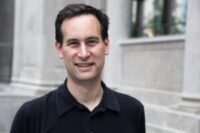
When not writing during spare hours on weekends, David Levithan is editorial director at Scholastic and the founding editor of the PUSH imprint, which is devoted to finding new voices and new authors in teen literature. His acclaimed novels Boy Meets Boy and The Realm of Possibility started as stories he wrote for his friends for Valentine’s Day (something he’s done for the past 22 years and counting) that turned themselves into teen novels. He’s often asked if the book is a work of fantasy or a work of reality, and the answer is right down the middle—it’s about where we’re going, and where we should be.








This book is so good and so important. Such a great interview!